Production control, quality inspection, equipment maintenance, data aggregation — most factories end up with four separate silos. Tsingley puts them all on one architecture: Cloud-Network-Edge-Device.
A Factory's IT Journey Usually Starts Wrong
Step 1: Buy an MES. Step 2: Realize the MES can't monitor welding quality, so buy a separate inspection system. Step 3: Equipment starts failing, so add a maintenance system. Step 4: Data sits in four different databases. Want a plant-wide view? Export to Excel and stitch it together manually.
This isn't your fault — it's a structural problem with traditional industrial software. Each system manages one layer. Nothing connects them vertically.
Tsingley's answer: take four things — line control, data aggregation, quality verdicts, equipment health — and build them on a single technical foundation. Not four silos. One stack.
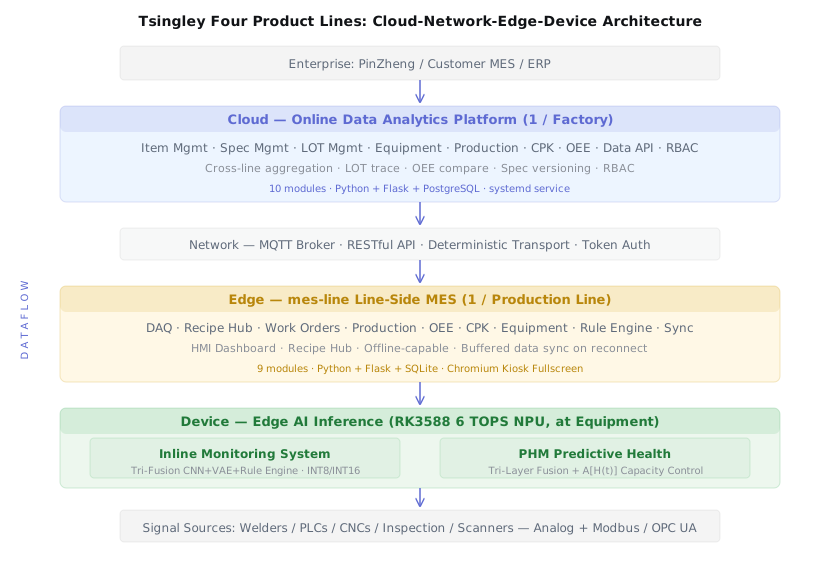
Five layers: Device (signal acquisition) → Device AI (inference) → Edge (line control) → Network (deterministic transport) → Cloud (analytics) → Enterprise systems
Four Products, One Chain
| Product | What It Does | In Plain English |
|---|---|---|
| mes-line | Line-side MES | Recipe-driven production that keeps running when the network drops |
| Online | Plant analytics | All line data auto-aggregated — stop pasting Excel sheets together |
| Inline Monitoring | Weld quality | 200ms per-weld OK/NG verdicts. 100% inspection. No more sampling. |
| PHM | Equipment health | From "fix it when it breaks" to "know how long it has left" |
Why Two Layers Instead of One?
mes-line sits at the production line. Online sits at the factory server. Not an arbitrary split — if the line controller depends on the factory network, a network outage stops production. With dual-layer, the line keeps running. When the network comes back, data syncs automatically. Risk stays contained.
Adding a new line? Deploy one more mes-line instance. Independent port. Independent operation. Online discovers it automatically. No architecture changes. No downtime.
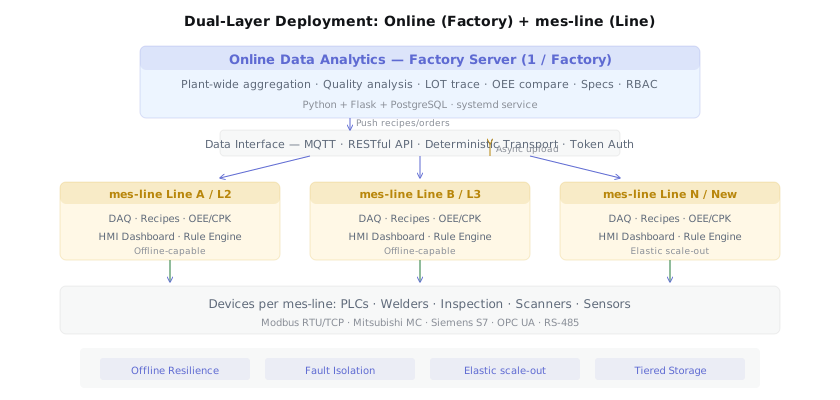
1 Online factory server + N mes-line edge instances, async communication over TCP/IP. Network outage? Lines keep running.
Data Flow: From Sensor Signal to Factory Decision in Under 200ms
Welder outputs 4 analog channels (power/amplitude/frequency/pressure) at 10 KHz → Device layer runs CNN+VAE fusion on RK3588 → Edge layer matches recipes and computes OEE/CPK → Network layer guarantees data integrity via deterministic transport → Cloud layer aggregates everything plant-wide.
End-to-end latency: under 200 milliseconds. The verdict is ready before the welding cycle even finishes.
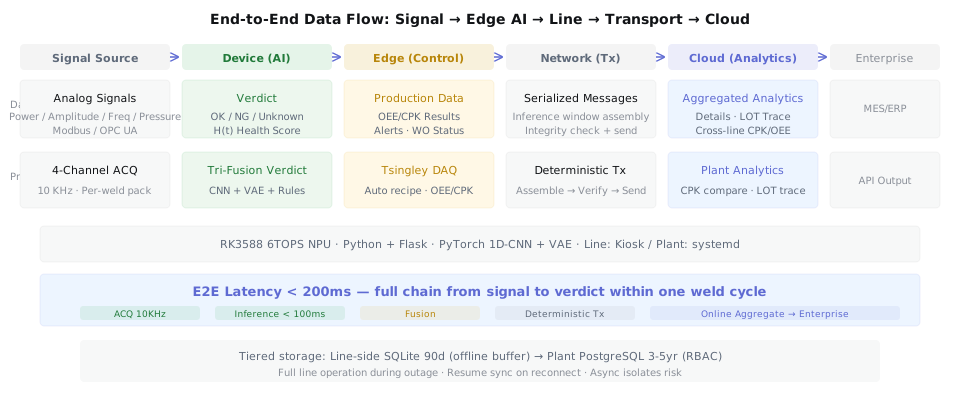
Five-stage flow: Device → Device AI (ms verdict) → Edge (real-time compute) → Network (deterministic) → Cloud (analytics) → Enterprise
12 Verticals, One Architecture
From EV battery welding to sheet metal flexible lines, from CNC machining to wind turbine health — 12 industry scenarios, same architecture, different configurations. Battery production uses all four lines. CNC only needs mes-line. Wind farms only need PHM.
mes-line covers 11 of 12 verticals. Online covers 7. Every customer gets what they actually need. Nothing they don't.
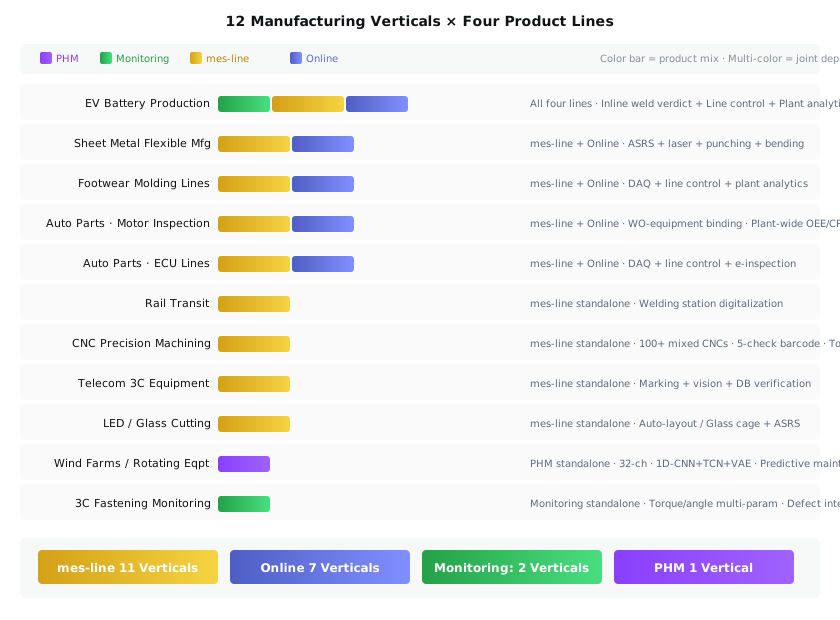
Mix and match: Battery = all four. CNC/Rail/3C = mes-line standalone. Wind = PHM standalone. Fastening = Monitoring standalone.
Tech Stack: Python + Flask + RK3588
No Java monoliths. No .NET licensing. Line-side: Python + Flask + SQLite, 6 TOPS NPU running quantized PyTorch models. Plant-side: PostgreSQL for 3-5 year retention. Frontend: Vanilla JS + ECharts. Deployment: Chromium Kiosk fullscreen, systemd auto-start. Light. Fast. Maintainable.
What These Four Products Actually Are
Not software licenses. A solution to four factory-floor problems: can't collect, can't judge, can't aggregate, can't predict. Line execution, cloud analytics, AI verdicts, and health management — four things, one foundation.