Traditional MES manages top-down — when the network drops, the line stops. mes-line inverts this: each line runs independently, recipe-driven, offline-capable, add lines without touching the architecture.
The Fatal Flaw of Traditional MES
MES is the factory's brain. But when that brain sits in a server room 500 meters away and every command depends on the network — a network outage becomes a production outage. The line stops. The MES shows "offline." The production manager waits for IT.
This isn't hypothetical. It happens every day on factory floors.
mes-line's design logic is simple: each production line gets its own brain. No factory network approval needed for autonomous execution. When connected, data syncs to Online. When disconnected, the line keeps running.
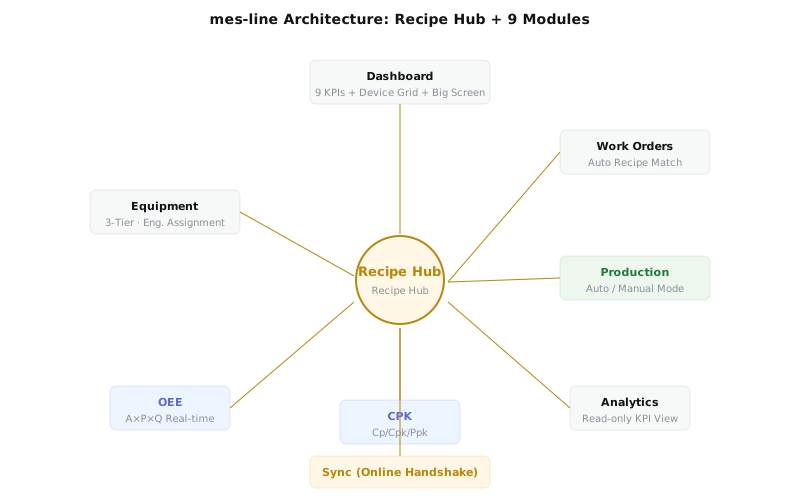
Recipe hub at the center, 9 modules around it. Change the recipe, everything adapts. No hard-coded dependencies between modules.
Recipe: Not a Feature. The Architectural Backbone.
In traditional MES, modules call each other directly. Work orders call equipment. Production calls quality. Change one module, the ripple effects break three others.
mes-line uses recipes as the single integration point. Work orders match engineering and equipment through recipes. Production pulls spec tables from recipes. OEE/CPK computes from production data. No module directly calls another module. Every relationship flows through the recipe table. Want to add a new module? Just read the recipe table. Zero intrusion.
Nine Modules. You Don't Have to Use All of Them.
| Module | In One Sentence |
|---|---|
| Recipe Mgmt | Line/station hierarchy, JSON version history, rollback any change |
| Work Orders | Enter a product code → auto-match recipe → auto-fill engineering and equipment |
| Production | Auto-acquisition or manual entry, per-item OK/NG verdict |
| Equipment | Line→Station→Device 3-tier, cascading cleanup across 18 tables on delete |
| OEE | A×P×Q real-time, configurable takt time |
| CPK | Cp/Cpk/Ppk, device/line level, instant alert below threshold |
| Dashboard | 9 KPIs + device grid + alert ticker, big-screen standalone mode |
| Sync | Bidirectional with Online, resume-from-break |
| HMI | Plugin-per-equipment repo model, independent versioning |
Tsingley DAQ: Six Protocols, One Engine
Modbus, Mitsubishi MC, Siemens S7, OPC UA, UDP, Node-RED — no need to write a new driver for every project. Tsingley DAQ ships with six pre-built protocol adapters. Background polling, auto-reconnect, JSON persistence. MockDriver simulation mode means you can develop and test without a single PLC on hand.
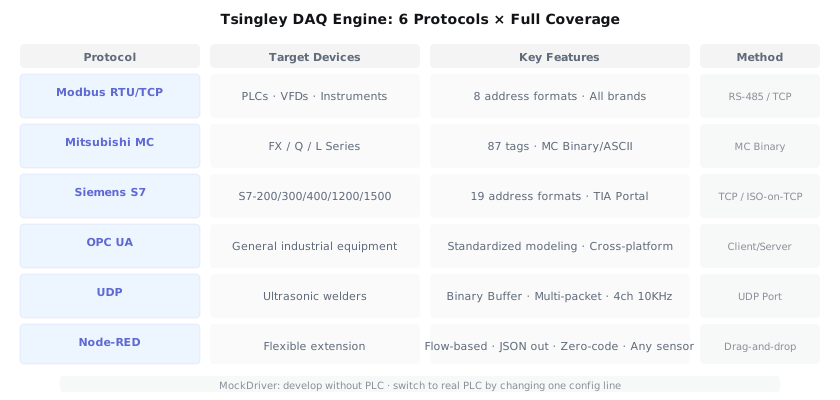
DAQ pipeline: Tag config → Background polling → Auto-reconnect → JSON storage → Rule engine trigger
Standalone or Line Edition?
Independent machines (CNC, cleaner, marker) → Standalone, 1 per machine. Multiple machines jointly producing the same product → Line Edition, 1 set for the whole line. The deciding question: same product item? Continuous process?
Standalone upgrades to Line Edition at any time — add stations, add equipment. No redeployment needed.
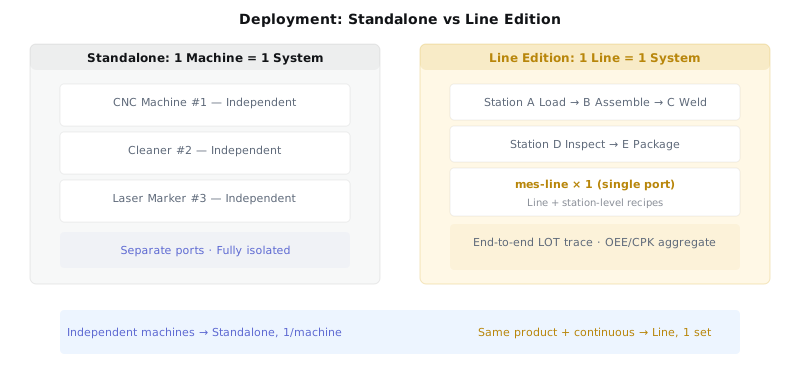
Standalone: 1 machine = 1 system, fully isolated. Line Edition: 10-15 machines = 1 system, divided by process station.
Should You Choose mes-line?
If your MES already works but you're tired of "network-down-line-down," "upgrade-means-plant-shutdown," and "add-a-line-means-rearchitect" — mes-line sits between your equipment and your MES, adding line-level autonomy without replacing anything. If you don't have a system yet, mes-line is the first one.